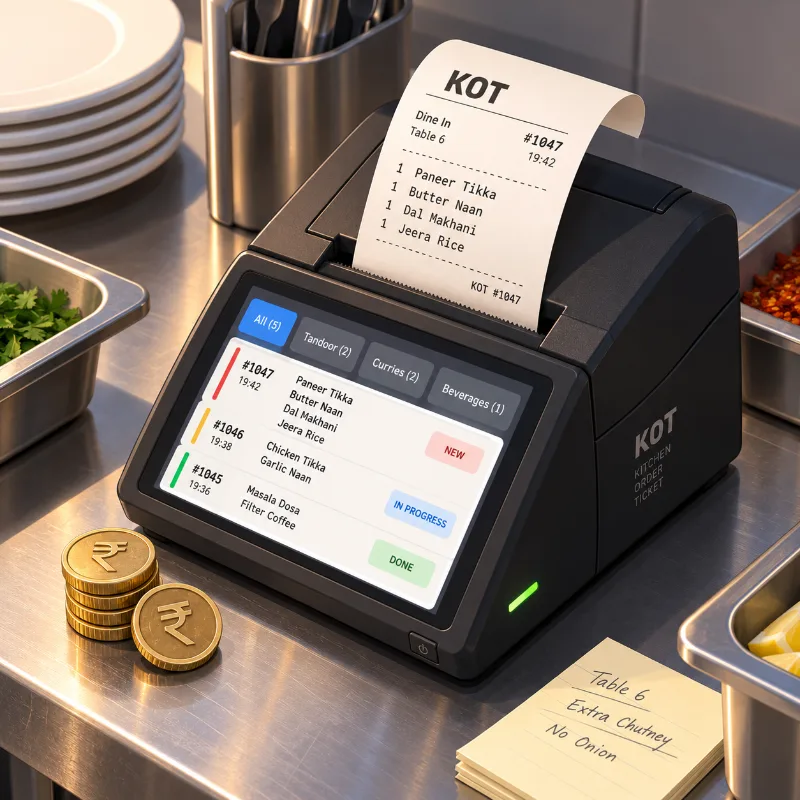
POS & billing
- KOT routing by station, split, merge and move tables
- Captain mode in the same app, no second licence
- Offline billing, khata, NC with reason, shifts and auto day-close

Full POS, inventory, payroll and proper double-entry books in one system, with AI agents that find the profit you are losing and tell you on WhatsApp, in rupees, before the month ends.
Everything your current POS does, plus the books and the agents it never had.
Why this is different
A dashboard shows you a number. You still have to know which number to look at, and when. OrderNest ties every cost to an outlet, a shift and a dish, so the system can notice instead of you.

Typical POS: rarely updated, never tied to what you paid.
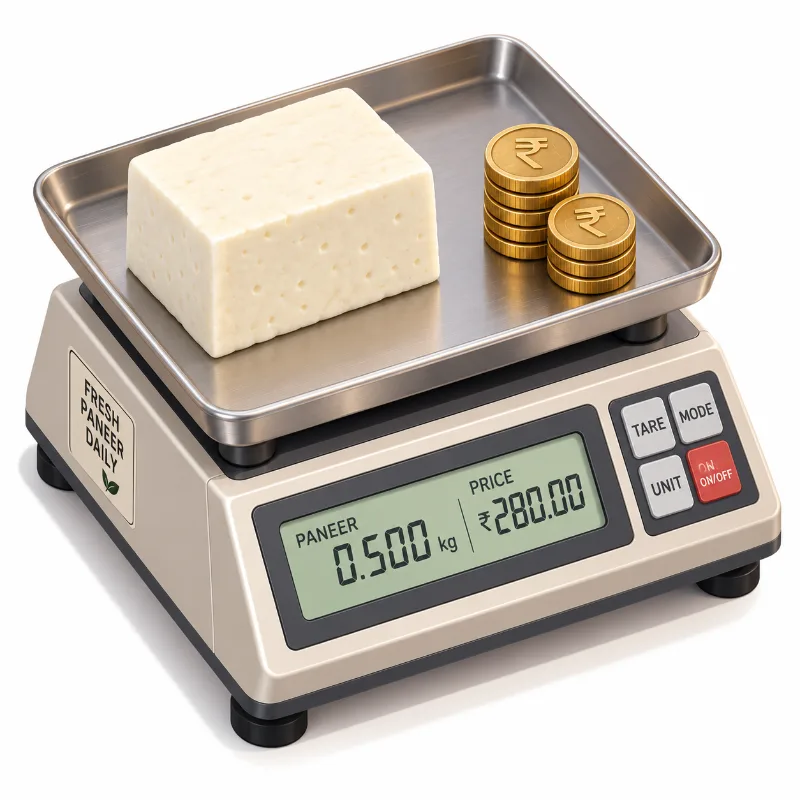
OrderNest: every dish priced from its recipe at the invoice rate, updated when a supplier price moves.
Typical POS: no idea what it was worth.
OrderNest: every sale takes ingredients out of stock at cost; food cost is live per outlet and per shift.
Typical POS: put together weeks after the decisions.
OrderNest: proper double-entry books that everything writes into and that balance every night.
Case-study percentages publish as customers sign them off.
The platform
Not four products exchanging spreadsheets and hoping the totals match at month end.

Already on Petpooja?
Switch in a week with your menu, customers and stock imported.
Full comparisonThe agent crew
Each agent owns one job and states its rupee impact before it acts. You approve with one tap on WhatsApp. Everything it does is journaled.
“Prahladnagar is down 3.8%. ₹560 of it is paneer used beyond recipe on the evening shift; the rest is oil up ₹29 a litre since 19 Aug.”
Reads the ledger, sales, variance and labour every night. 9am WhatsApp, top three drivers in rupees per outlet, one action each.
“Which outlet lost profit last week, and why?” answered in plain language with the driver table underneath.
Any question over sales, costs, labour and the books.
“1.4 kg more paneer than recipes call for, ₹560 over four days, nearly all on the evening shift. Portion check suggested.”
Theoretical vs actual by ingredient and shift, with rupee impact.
“Staff cost is 4.1% higher than the same week last month. Two outlets ran unplanned overtime on Saturday. Post the close?”
Checks the day-close journals before they post.
“Read it. 3 lines, matched to PO-118. Paneer 10 kg at ₹400, up from ₹380 last week. Post to books?”
Photograph the bill on WhatsApp; lines read, matched to the PO, posted.
“Payout for 12–18 Sep is ₹2,140 short of orders delivered. 6 cancellations charged to you; 2 look disputable.”
Reconciles Zomato and Swiggy payouts to orders and posts the deductions.
What it is worth
Assumes 2 points of food cost, 1.5 points of labour, 0.5% of purchases in price variance and 1% of aggregator sales in payout errors.
For accountants
A real ledger, not an export. Trial balance, balance sheet, general ledger, AP/AR ageing and GST summary come from the same journals the POS writes, with a full audit trail.
See the books →Running a restaurant is hard enough